Best season
Productive year-round; strongest November–August
Recommended technique
Live bait, poppers and jigs
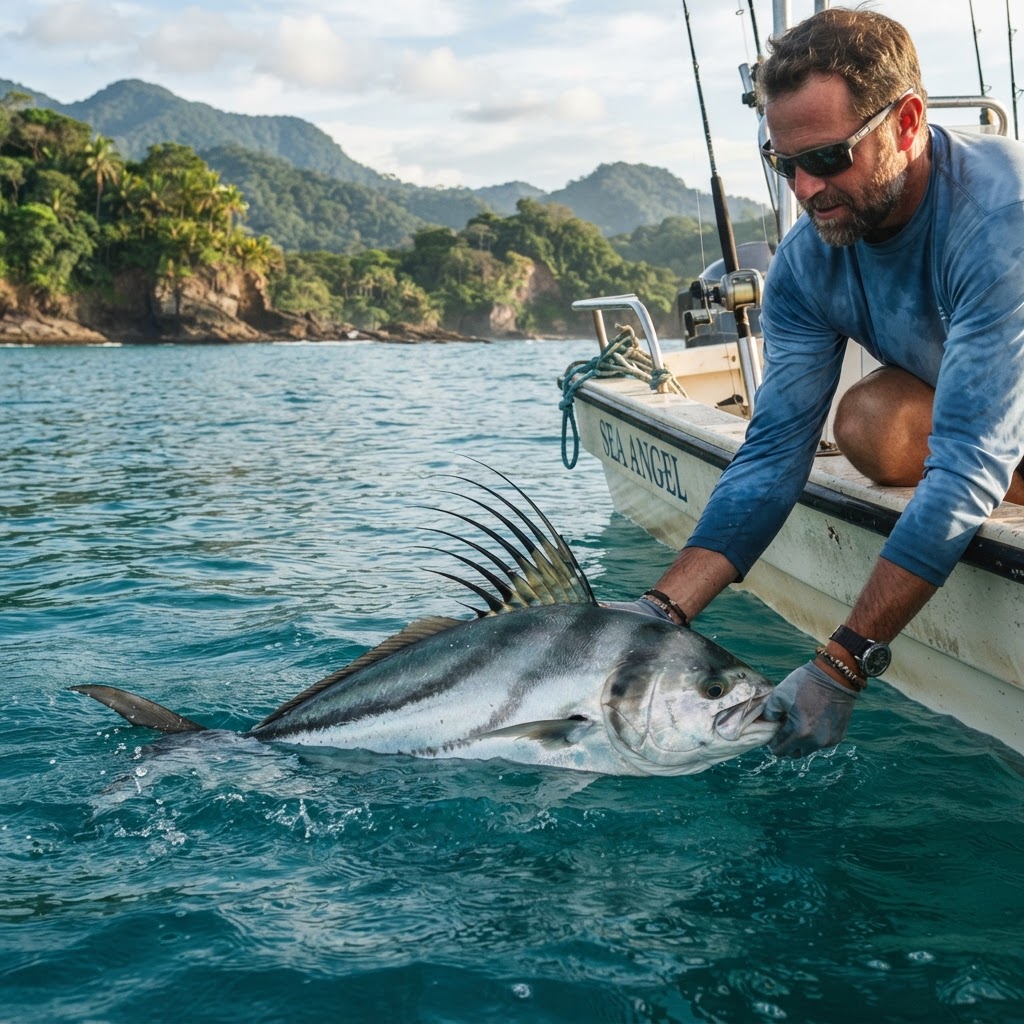
Unlike pelagic fish that roam far offshore, roosterfish hunt close to Costa Rica's tropical coastline. That gives anglers a chance to combine serious sport fishing with views of rocky headlands, beaches, islands, and the forested coast near Manuel Antonio.
Where and When to Find Roosterfish
Captains search shallow beaches, rocky points, small islands, reef edges, and river mouths from roughly 15 to 100 feet deep. Roosterfish often travel just outside the surf or patrol the current side of structure, where sardines, blue runners, and other baitfish become concentrated.
Tide matters as much as the month. Incoming or outgoing water can activate a point for a short period, so a good inshore plan moves between several zones rather than waiting at one landmark. Water clarity, swell direction, and the presence of diving birds help the captain choose the next stop.
January
Dry-season weather and clear inshore water often support dependable live-bait fishing around rocky points.
February
Stable seas and concentrated bait make this a strong month for casting and slow trolling.
March
Warm, bright conditions continue; early mornings and moving tides can be especially productive.
April
Roosterfish remain available as weather begins to transition and bait gathers near river mouths.
May
Early green-season rain can add color and nutrients near the coast while roosterfish stay active.
June
A productive month around islands, reef edges, and current-swept points when bait is present.
July
Brief dry-season breaks can improve water clarity and create excellent inshore conditions.
August
Roosterfish opportunities continue, with tide and daily water clarity guiding the captain's plan.
September
Heavier rain can make conditions variable; protected zones and cleaner water become priorities.
October
The wettest period usually brings fewer ideal days, but fish remain possible between weather systems.
November
Improving weather and fresh bait movement begin one of the most reliable seasonal windows.
December
Dry-season patterns return, offering comfortable runs and strong chances along the Central Pacific coast.
Fishing Techniques and Tackle
Slow-trolled live bait is the most consistent presentation. Blue runners, sardines, or similar local bait are bridled or hooked to swim naturally while the boat works along structure. Medium-heavy spinning or conventional tackle, a strong fluorocarbon leader, and enough drag to keep a fish away from rocks are standard choices.
Casting large surface poppers creates the most visual approach. Long casts are worked with forceful sweeps and pauses to imitate a fleeing baitfish. Vertical jigs can reach fish holding deeper along reef edges. Roosterfish do not require wire leader, and excessively heavy terminal tackle can reduce the natural action of the bait.
What to Expect in the Fight
A typical Quepos roosterfish may weigh 20 to 50 pounds, while larger fish can exceed 60 pounds. The first run is usually fast and determined, often directed toward rocks or deeper water. Fights commonly last 10 to 30 minutes depending on tackle, current, and fish size.
Anglers should maintain steady pressure, follow the fish around the boat when necessary, and listen to the mate. Roosterfish are released, so efficient fights and brief, well-supported photographs help the fish return in good condition.
Recommended Charter and Boat
An inshore charter provides the short run, casting access, and flexible half-day or full-day schedule this species requires. Isabella, the 28-foot Rampage in our fleet, offers a practical platform for working coastal structure while still providing professional tackle and crew support. Review the boat and current options before selecting a departure.
Explore Inshore Fishing · View Isabella — 28' Rampage
Roosterfish FAQ
Can you eat roosterfish?
ShareFishing treats roosterfish as a catch-and-release sport species. Their value is in the fight and a healthy release, not as table fish.
Do I need a full-day charter?
A half-day can be productive when bait and tides align. A full day gives the captain more time to reach additional points and fish more than one tidal stage.
What tackle is used for roosterfish?
Crews normally use medium-heavy spinning or conventional outfits with live bait, poppers, or jigs and a strong abrasion-resistant leader.