2026-07-29 · By Alejandro Núñez
First Time Deep Sea Fishing: What to Know
Deep sea fishing includes travel time, searching, and periods of preparation between bites. The ocean is not an aquarium, so success depends on conditions, effort, and opportunity rather than a guaranteed number of fish. Understanding this before departure helps first-time anglers appreciate the captain's decisions and enjoy the full day, including wildlife, scenery, and time on the water.
Prepare the night before. Eat a normal dinner, limit alcohol, sleep well, and organize lightweight clothing, polarized sunglasses, a hat, and sunscreen. On the morning of the trip, eat a light breakfast and begin hydrating. If you are concerned about motion sickness, ask a medical professional which option is appropriate and when it should be taken. Waiting until you feel sick may be too late for some treatments.
At the marina, arrive at the requested time so the crew can complete licenses, introductions, and a safety briefing without rushing. Ask where life jackets, fire equipment, and the restroom are located. Keep bags and shoes out of working areas, especially once the mate begins deploying hooks, leaders, and teasers.
The offshore run may take time. Use the ride to watch for birds, dolphins, floating debris, and changes in water color—the same signs the captain uses to locate fish. Once trolling begins, the crew continually checks baits and adjusts the spread. Quiet periods do not mean nothing is happening; searching and maintaining the presentation are active parts of the job.
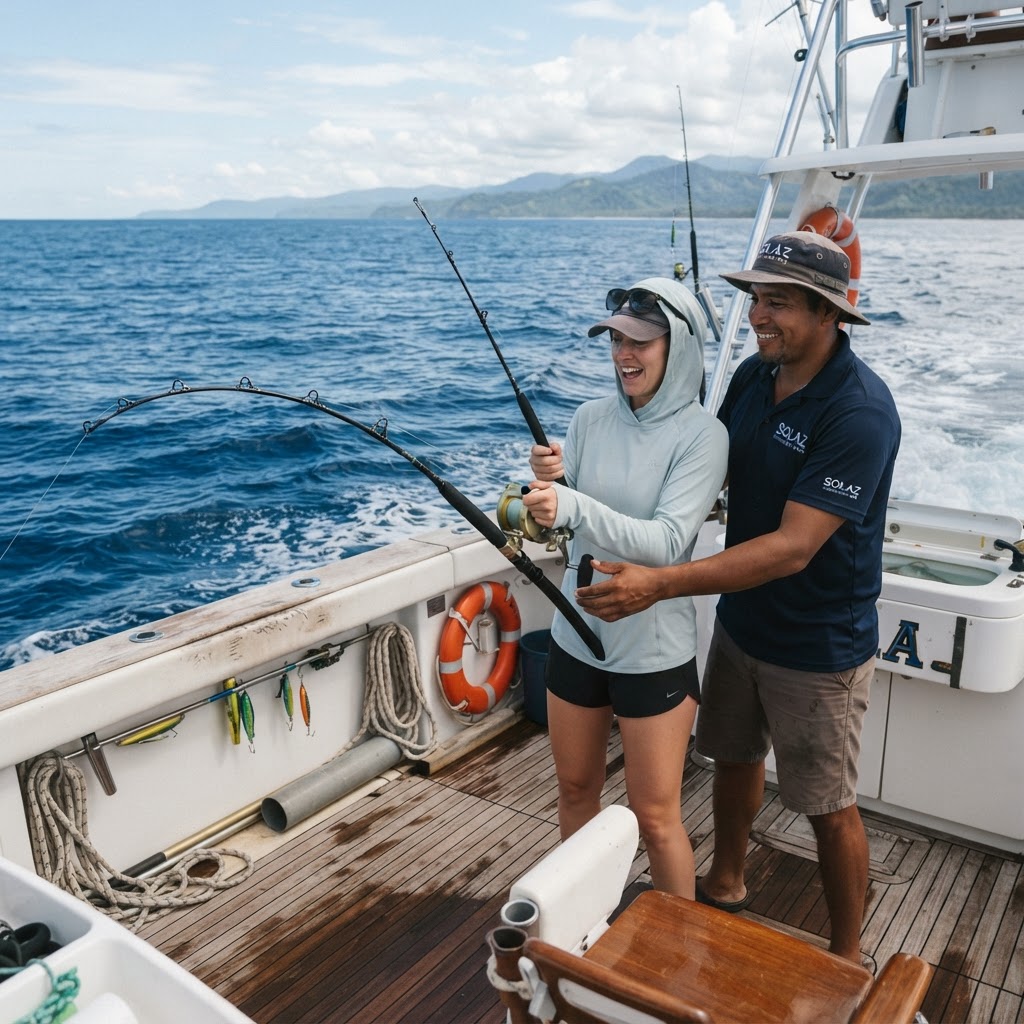
When a fish strikes, stay calm and listen. The mate will explain where to stand, how to hold the rod, and when to reel. Keep the rod pointed safely away from other guests and never wrap line around your hand. Fighting a large fish is about rhythm and steady pressure, not maximum strength. Ask for a harness or assistance if needed.
Respect release instructions for billfish and other sport species. Have cameras ready before the fish reaches the boat so photography is efficient. At the end of the trip, ask the crew about the species encountered and techniques used. Even if fishing is slower than expected, a well-prepared first trip teaches you how offshore crews read conditions and gives you a much stronger foundation for the next adventure.