2026-08-21 · By María Fernández
Offshore vs Inshore Fishing in Costa Rica: Which to Choose
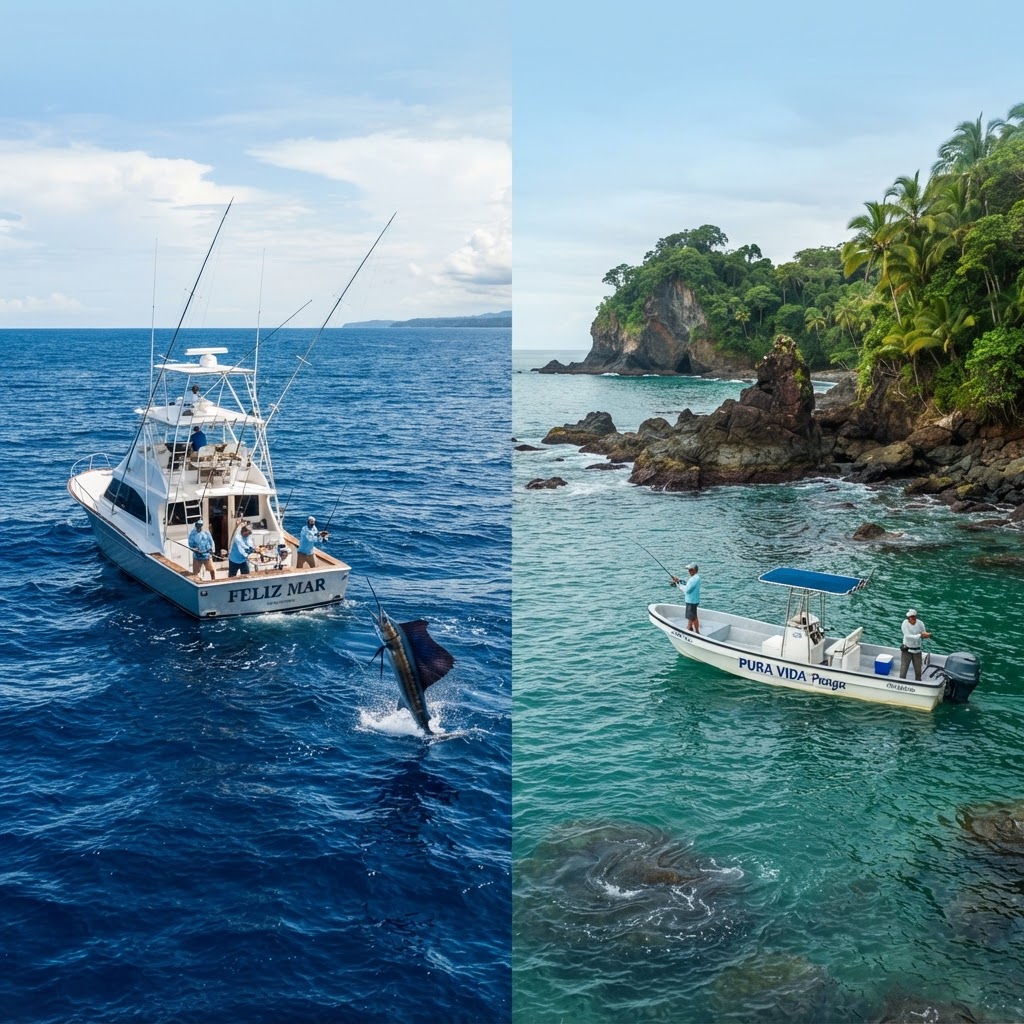
Offshore fishing from Quepos targets marlin, sailfish, yellowfin tuna, dorado, and wahoo. These trips normally run a full day because the boat may travel far beyond the coastline to find blue water, current breaks, floating debris, birds, and bait. Trolling teasers, natural baits, and lures is common, although crews may also cast poppers or use live bait when tuna and other gamefish are feeding nearby.
The offshore experience is built around patience and preparation. Travel and search time are part of the day, and action may arrive suddenly after a quiet period. Billfish encounters require teamwork between captain, mate, and angler. If your priority is a marlin or sailfish, the additional range and fishing time of a full-day trip are important. A larger sportfishing boat can provide more shade, seating, and stability for guests who prefer extra comfort.
Inshore fishing stays closer to rocky points, islands, beaches, and river mouths. Roosterfish, snapper, snook, jacks, mackerel, and corvina are common targets. Captains may slow-troll live bait, cast poppers, jig over structure, or fish near current lines. Because the run is usually shorter, a half-day trip can still provide meaningful fishing time and views of the Quepos and Manuel Antonio coastline.
Choose offshore if pelagic species, deep blue water, and the possibility of billfish are your main goals. Choose inshore if you prefer a shorter day, more casting, varied coastal scenery, or species such as roosterfish and snapper. Families and first-time anglers can enjoy either option, but guests concerned about motion may find protected inshore water more comfortable on some days.
Cost also matters. Offshore trips generally use more fuel and require a full day, while inshore charters may be less expensive. Shared departures can reduce the per-person cost for solo travelers and couples. Before reserving, discuss your preferred species, trip length, group size, and comfort level. The best choice is not simply the trip with the biggest fish; it is the charter that matches your expectations and gives the captain enough flexibility to work with current conditions.