
2026-08-12 · By Sofía Vargas
Roosterfish Season in Quepos, Costa Rica
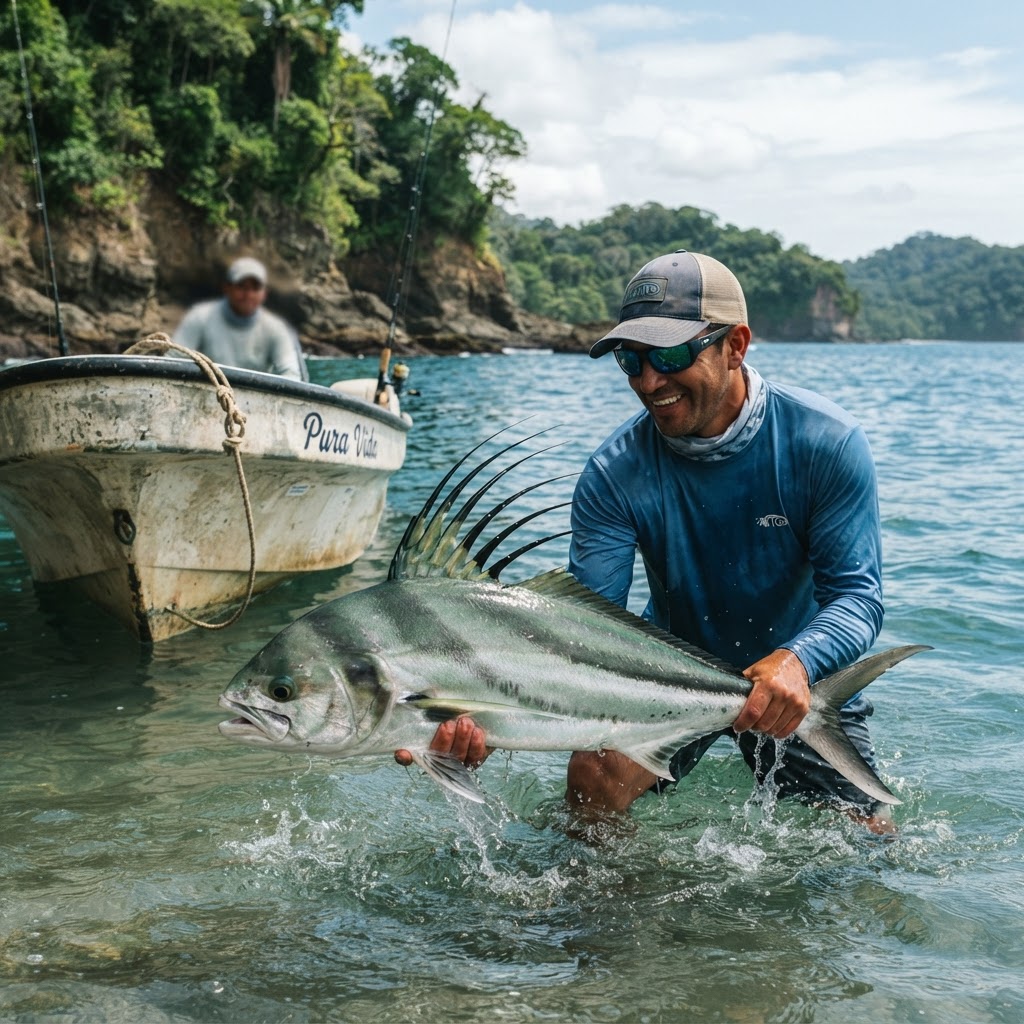
Roosterfish can be encountered for much of the year around Quepos, with November through August offering a broad planning window. Their movement depends on bait, tides, water clarity, swell, and coastal conditions more than one fixed calendar date. A productive month can still include slow days, while favorable bait and weather can create excellent opportunities outside the traditional peak.
Captains search rocky points, islands, beaches, and river mouths where roosterfish ambush sardines, blue runners, and other baitfish. These fish often patrol changing depth near structure rather than remaining in one spot. Tidal movement can concentrate bait and improve activity, so the crew may rotate through several areas as the water changes.
Slow-trolled live bait is one of the most dependable methods. The captain positions the boat so the bait swims naturally near productive structure while the angler watches for a strike. Casting large surface poppers is more physical but can produce unforgettable visual attacks. Vertical jigs and other artificial lures may also work when fish or bait appear deeper in the water column.
A half-day inshore charter can be enough when conditions are favorable, but a full day offers more time to explore distant points and adapt to tides. Boats with open casting space are helpful for lure fishing, while shade and comfortable seating matter for families or guests who prefer a relaxed trip. Discuss your preferred technique with the operator so the captain can prepare suitable bait and tackle.
Roosterfish are powerful. Once hooked, maintain steady pressure, follow the mate's directions, and avoid pumping the rod too aggressively. Fights can be demanding, especially with larger fish in current. The crew will help position the boat and clear other lines.
These fish are valued primarily as a sport species and should be released. Keep the roosterfish supported horizontally, minimize time out of the water, and have the camera ready before lifting it for a quick photograph. Never hold a heavy fish only by the tail or jaw. Careful handling gives it the best chance to swim away strongly and supports the quality of Costa Rica's inshore fishery for future anglers.