2026-08-03 · By Valentina Rojas
Sailfish Fishing in Quepos: What to Expect
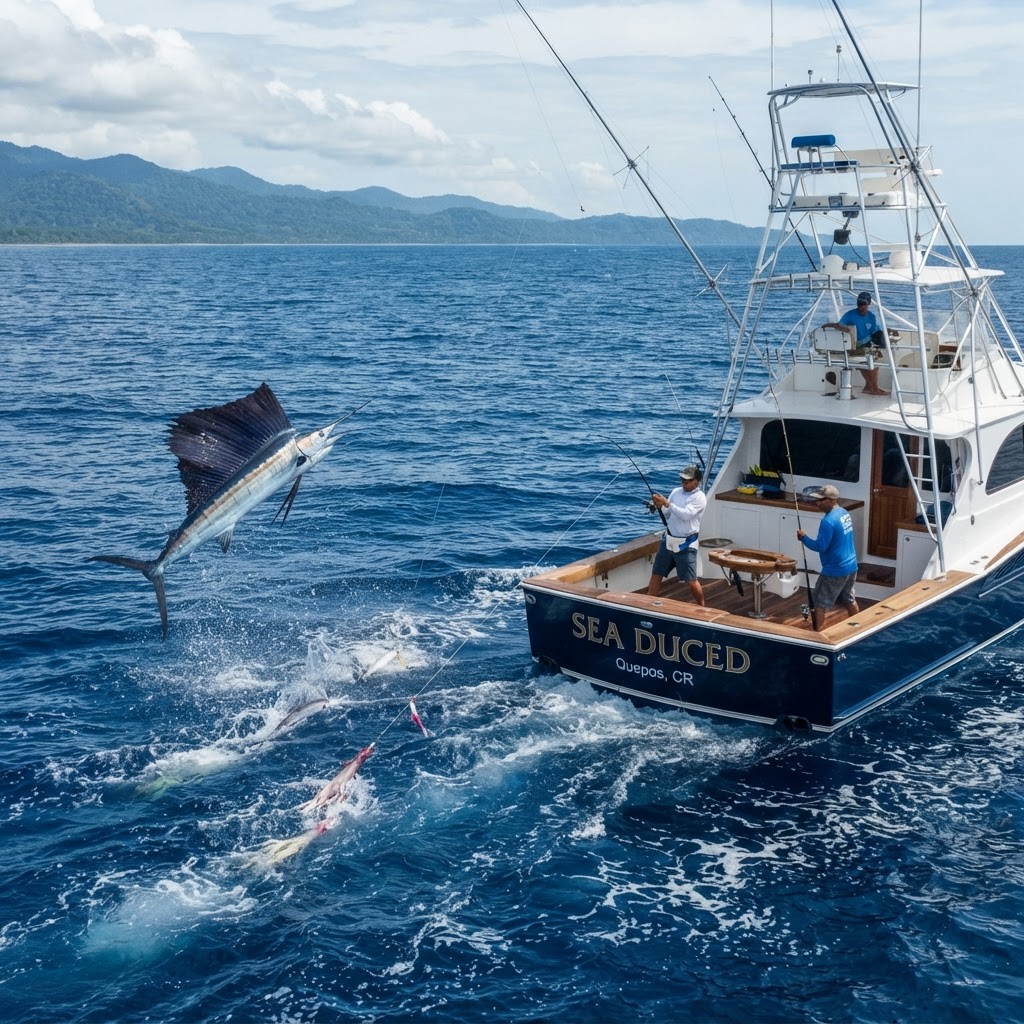
Quepos sailfish season is strongest from December through April, although fish may appear at other times of the year. A full-day charter leaves Marina Pez Vela early and runs offshore while the crew prepares teasers, rigged ballyhoo, circle-hook tackle, and the trolling spread. The distance to productive water changes with currents, bait, and recent activity, so travel time is part of the experience.
The captain searches for clean blue water, current edges, temperature breaks, birds, floating material, and concentrations of bait. Sailfish are migratory predators, not residents of one waypoint. Electronics and current information help narrow the search, but visual observation and local experience remain essential.
Most crews troll several natural baits behind hookless teasers. When a sailfish rises into the spread, the mate may pull the teaser away and present a rigged bait. This bait-and-switch technique creates a close, visible encounter and gives the angler a controlled opportunity to let the fish eat before the circle hook sets. Listen carefully to instructions about free-spooling, drag pressure, and when to begin reeling.
First-time anglers do not need previous offshore experience. The crew will explain where to stand, how to hold the rod, and how to move as the fish changes direction. Keep steady pressure, reel when the fish allows, and avoid touching the drag unless instructed. Sailfish often jump repeatedly, but every fight is different.
A comfortable offshore boat should have reliable engines, professional tackle, shade, and enough cockpit room for the number of guests. Larger boats may feel more stable in open water, while smaller sportfishing boats can still be effective when properly equipped. If motion is a concern, consult a medical professional before departure and prepare before symptoms begin.
Sailfish are released. The crew uses circle hooks and careful boat handling to reduce harm. Photography should be quick, with the fish supported properly and returned to the water as soon as possible. A successful day is measured not only by a photograph, but by a healthy release and the quality of the entire offshore experience.